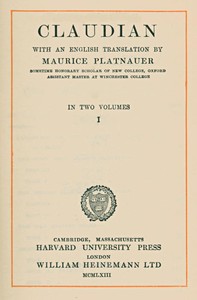
File Reader: Claudian, volume 1 (of 2): With an English translation by Maurice Platnauer
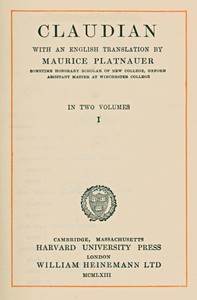
"Claudian, volume 1 (of 2): With an English translation by Maurice Platnauer" offers readers an insightful look into the works of Claudianus, an influential Roman poet of the late fourth and early fifth centuries. Claudian's poetry not only reflects the political intricacies of his time but also showcases his artistic brilliance and mastery of language. Platnauer's translation brings this classical work to a modern audience, allowing for a fresh appreciation of its themes and stylistic elements.
The Story
The text primarily consists of epic poems that explore the various events and figures of the late Roman Empire, particularly focusing on the reign of Emperor Honorius. Among the highlights are the accounts of battles, the rise of political figures, and the interplay between humans and divine beings. Claudian's narrative style balances vivid imagery and sharp political commentary, creating a dynamic portrayal of his historical context.
The themes of fate, power, and the role of the divine permeate the work, with a tone that oscillates between grandeur and irony. Claudian's keen observations on the human condition and the nature of authority resonate through his verses, inviting readers to reflect on the complexities of governance and morality.
Why You Should Read It
- Reason 1: Experience the rich language of Latin poetry through a well-crafted English translation that maintains the original's lyrical beauty.
- Reason 2: Gain insight into the political and social dynamics of the late Roman Empire, which are portrayed with both depth and nuance.
- Reason 3: Explore how Claudian’s work influenced later literary traditions, making this volume essential for understanding the evolution of Western literature.
- Reason 4: Engage with themes of power and morality that remain relevant today, offering a historical lens through which to view contemporary issues.
- Reason 5: Discover the interplay between art and politics in Claudian’s narrative, providing a unique perspective on the role of poets in shaping historical discourse.